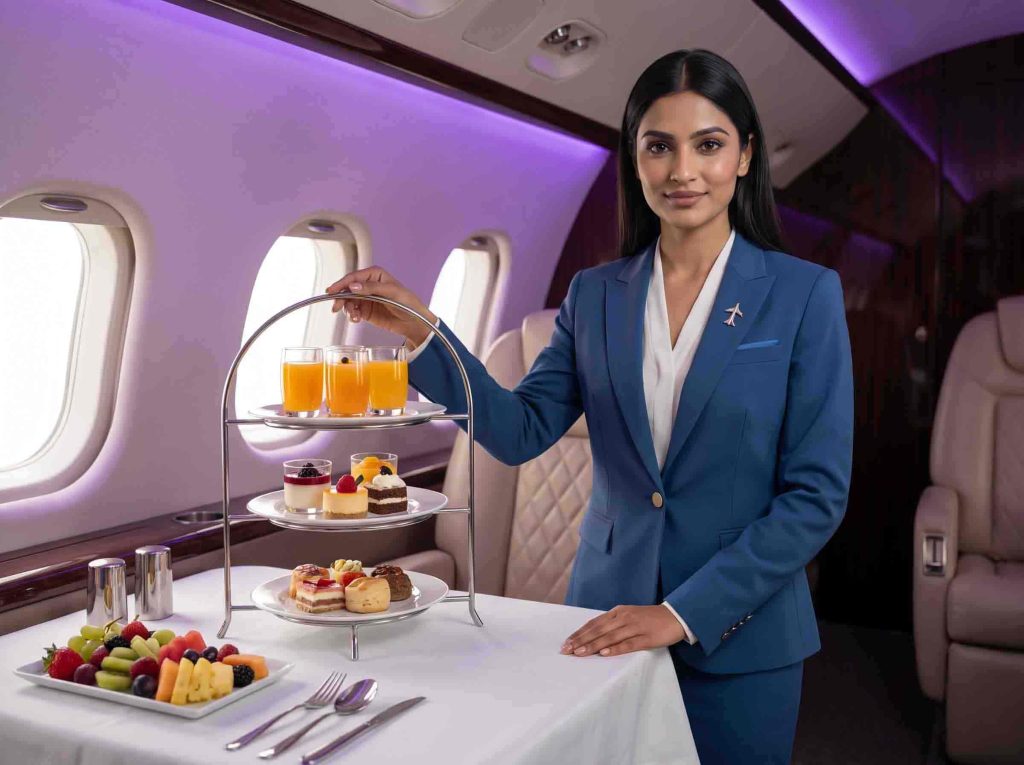
Cabin Crew & Private Jets: The People Behind the Luxury in the Sky
When people think about private jets, they often imagine sophisticated aircraft, luxurious interiors, international destinations, and seamless arrivals. But behind every exceptional private aviation experience is another essential element: the cabin crew.
A private jet may feature an impressive cabin and advanced technology, but the people onboard are responsible for turning those features into a memorable passenger experience. Private jet cabin crew combine hospitality, safety awareness, discretion, communication, and attention to detail to make every journey feel effortless.
What Is a Private Jet Cabin Crew?
A private jet cabin crew is responsible for supporting passengers throughout their journey. Their responsibilities can include cabin preparation, passenger assistance, food and beverage service, safety procedures, communication with the flight crew, special requests, and maintaining passenger privacy.
However, the role goes far beyond serving meals and drinks. A professional crew needs to understand passenger expectations, remain calm under pressure, anticipate requirements, and maintain consistently high standards throughout the flight.
Private Jet Crew vs. Commercial Airline Crew
There are important similarities between private and commercial aviation, particularly regarding safety and passenger care. However, the passenger experience can be very different.
Commercial airline cabin crew generally serve larger numbers of passengers according to standardized procedures. Private aviation typically involves a much smaller passenger group, allowing cabin crew to provide a more personalized level of service.
Instead of providing the same service to hundreds of passengers, private jet crew can focus closely on the specific requirements of the people onboard.
That could mean remembering a preferred beverage, understanding dietary requirements, adjusting meal timing, or knowing when a passenger simply wants privacy.
Why Cabin Crew Are Essential to Private Aviation
Luxury is not created by an aircraft alone.
A private jet may have premium materials, sophisticated lighting, advanced entertainment systems, and an impressive cabin. However, the human interaction onboard has a major influence on how passengers experience the journey.
Professional cabin crew aim to provide service that feels warm, discreet, efficient, personalized, and professional. The best service often feels almost invisible because the crew knows when to assist and when to give passengers space.
This balance is one of the defining characteristics of premium private aviation.
Personalized Service in the Sky
One of the biggest advantages of private aviation is personalization.
Passengers may have specific preferences regarding food, beverages, cabin temperature, seating, meal timing, or the way they use their time onboard. Private jet crew can prepare for these requirements before departure and adapt throughout the journey.
For example, an executive may want a quiet environment for a confidential meeting. A family may prefer to have dinner at a particular time. Another passenger may want to work for several hours before relaxing.
Good cabin service adapts to these requirements without becoming intrusive.
Safety Always Comes First
While private jets are strongly associated with luxury, safety remains a fundamental responsibility of cabin crew.
Cabin professionals receive training appropriate to their role and aircraft, including emergency procedures, passenger safety, evacuation procedures, and onboard equipment.
The passenger may notice the hospitality first, but safety procedures remain an essential part of the operation.
The combination of safety awareness and premium service is what makes private aviation cabin crew different from ordinary hospitality staff.
Attention to Every Detail
The private aviation experience is often defined by small details.
Passengers may notice the organization of the cabin, the presentation of a drink, the timing of a meal, the availability of a preferred snack, or the way their personal belongings are handled.
Individually, these details may seem minor. Together, they can shape the entire passenger experience.
An experienced cabin crew member learns to identify these requirements before passengers have to ask.
That is the essence of attentive private jet hospitality.
Private Jet Catering
Food and beverage service is another important part of the private aviation experience.
Depending on the aircraft and operator, catering can be customized around passenger requirements. Options may include specific cuisines, dietary requirements, premium beverages, fresh meals, snacks, desserts, and children’s meals.
Meal timing can also be adjusted around the passenger’s schedule, which is particularly useful during long-haul flights.
For private aviation clients, dining can become an extension of the overall luxury experience rather than simply an inflight necessity.
Serving Business Executives
Private jets are frequently used by executives and business leaders who need to travel internationally while maintaining demanding schedules.
For these passengers, the aircraft can function as both a private lounge and an executive workspace.
A passenger might need complete privacy for a business discussion, while another may want to work uninterrupted. Cabin crew need to understand these different requirements and adapt their service accordingly.
The ability to know when to engage and when to step away is an important part of professional private aviation hospitality.
Discretion Is Part of the Service
Discretion is one of the defining qualities of private aviation.
Passengers may include business executives, entrepreneurs, investors, celebrities, families, and other high-profile individuals. Some may need to discuss confidential business matters, while others simply value a private environment.
Professional cabin crew understand that passenger privacy is part of their responsibility.
They handle conversations, requests, and personal information carefully and avoid unnecessary attention.
In private aviation, discretion is not an optional extra. It is part of delivering a premium experience.
Cabin Crew on Long-Haul Private Jets
Long-range aircraft such as the Gulfstream G800, Gulfstream G700, Bombardier Global 7500, and Dassault Falcon 10X are designed for extended international missions.
On a long-haul flight, cabin crew need to maintain consistent service over many hours.
The journey can move through several stages:
Departure: Welcoming passengers and ensuring they are comfortable.
Cruise: Providing meals, refreshments, and assistance.
Work period: Supporting passengers who need privacy and connectivity.
Rest period: Maintaining a calm cabin environment.
Arrival: Preparing the cabin and passengers for landing.
The objective is to make a long journey feel smooth and natural.
Anticipating Passenger Needs
One of the most valuable skills in private aviation hospitality is anticipation.
Experienced crew members learn to recognize when passengers may need assistance without constantly interrupting them.
For example, they may notice when a passenger has finished a beverage or has been working for several hours and may appreciate a refreshment.
However, anticipation requires balance.
Luxury service is not about constantly doing something for the passenger. Sometimes the best service is simply allowing the passenger to enjoy complete privacy.
Professional Presentation and Grooming
Cabin crew represent the aviation operator and contribute to the overall image of the private jet experience.
Professional grooming, appropriate attire, confident body language, and clear communication all contribute to a polished passenger experience.
However, appearance alone is not enough.
A polished appearance creates the first impression, while consistent professionalism builds passenger confidence throughout the journey.
Communication Skills in Private Aviation
Private jet cabin crew interact with passengers from different countries, cultures, and professional backgrounds.
Clear and respectful communication is therefore essential.
Crew members may coordinate with pilots, ground teams, catering companies, aviation operators, passengers, and flight coordinators.
Strong communication helps ensure that passenger requirements are understood and that everyone involved in the operation is working toward the same objective.
Private Jet Hospitality
Private aviation and luxury hospitality share several important principles:
Personalization.
Attention to detail.
Discretion.
Professional presentation.
Consistency.
Private aviation adds another layer because service takes place inside a moving aircraft, where safety and operational requirements must always remain a priority.
This makes private jet cabin service a specialized form of hospitality that requires both aviation awareness and excellent people skills.
What Makes an Excellent Private Jet Cabin Crew Member?
A strong private aviation professional combines several qualities.
Professionalism helps passengers feel confident in the crew.
Discretion protects passenger privacy.
Attention to detail ensures that small requirements are not overlooked.
Adaptability allows the crew to respond to different passengers and changing circumstances.
Communication keeps service and operations coordinated.
Calmness helps the crew remain composed when unexpected situations arise.
Hospitality ensures passengers feel welcomed and respected.
Together, these qualities form the foundation of exceptional private aviation service.
The Human Side of Private Aviation
Private aviation marketing often focuses on aircraft exteriors, luxury interiors, destinations, and premium amenities.
But behind every successful journey is a team of people.
Pilots, engineers, flight coordinators, ground teams, catering professionals, and cabin crew all contribute to the final experience.
The cabin crew may be the people passengers interact with most directly.
Their responsibility is to make a complex aviation operation feel simple and seamless from the passenger’s perspective.
The Future of Private Jet Hospitality
Passenger expectations continue to evolve.
Modern private aviation clients increasingly expect personalized service, connectivity, premium catering, privacy, and seamless coordination.
Technology will continue to improve aircraft systems and passenger experiences, but the human element will remain important.
Passengers may appreciate advanced technology, but exceptional service is what often makes a journey memorable.
Experience Private Aviation Differently
The next time you see a private jet cabin crew member welcoming passengers aboard, remember that the polished appearance is only one part of the job.
Behind that calm welcome is preparation, training, attention to detail, communication, and an understanding of luxury hospitality.
The aircraft may be the symbol of private aviation.
The cabin may be the environment where the journey takes place.
But the cabin crew brings the experience to life.
Conclusion
Private aviation is about more than luxurious aircraft and exclusive destinations. It is also about the professionals who make every journey feel seamless.
From safety and cabin preparation to personalized catering, discretion, communication, and attentive hospitality, private jet cabin crew play an essential role in creating the experience passengers expect from premium aviation.
The true luxury of private aviation comes from the combination of exceptional aircraft, professional operations, and human service working together.
Cabin Crew. Private Jets. Exceptional Journeys.